Pull up Jupiter Island real estate on five different sites and you'll get five different answers. One shows a median sale price of $6.9 million for the three months ending July 2026, down 66.3 percent from the year before. Another puts the typical home value at $9.13 million, up 0.6 percent. A third lists the median asking price at $12.7 million in August 2026, down roughly a quarter from a year earlier. A fourth, tracking the town specifically as of March 2026, shows a median of $18,825,000. A fifth shows $1.7 million, up 27.9 percent.
That last one isn't wrong so much as it's not talking about the same place. It's the tell that explains most of the confusion.
Two places share a name
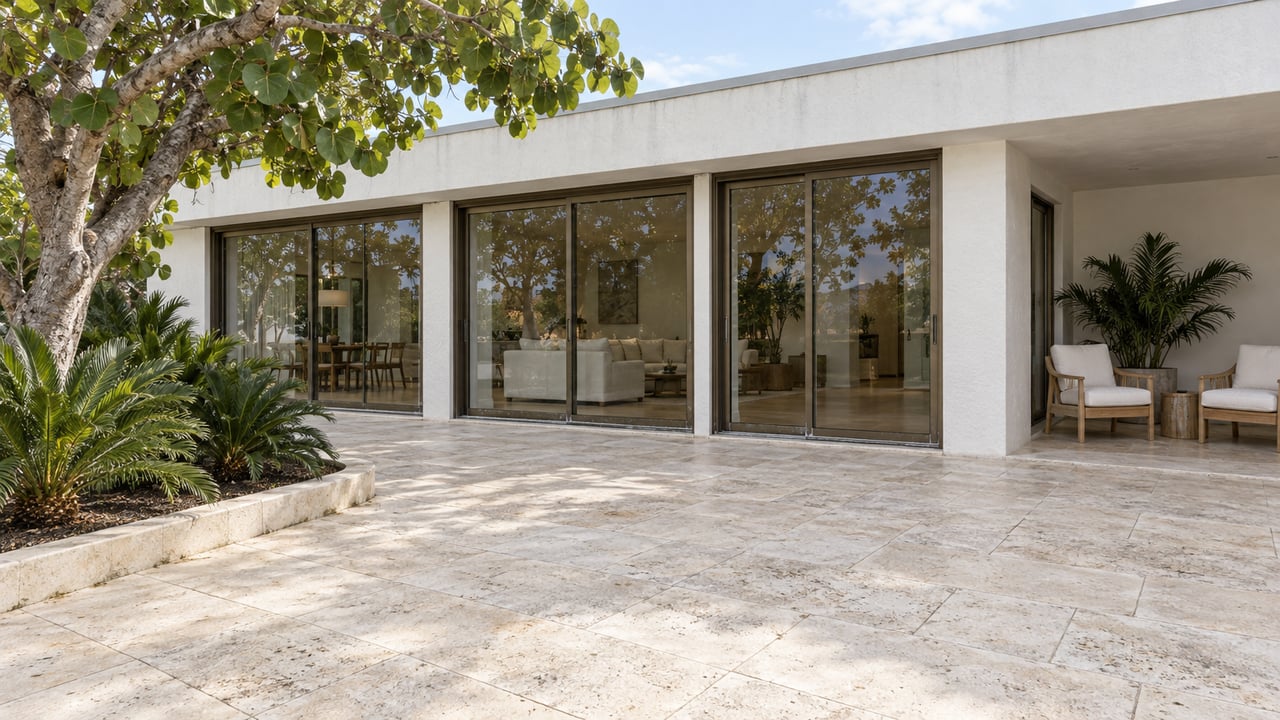
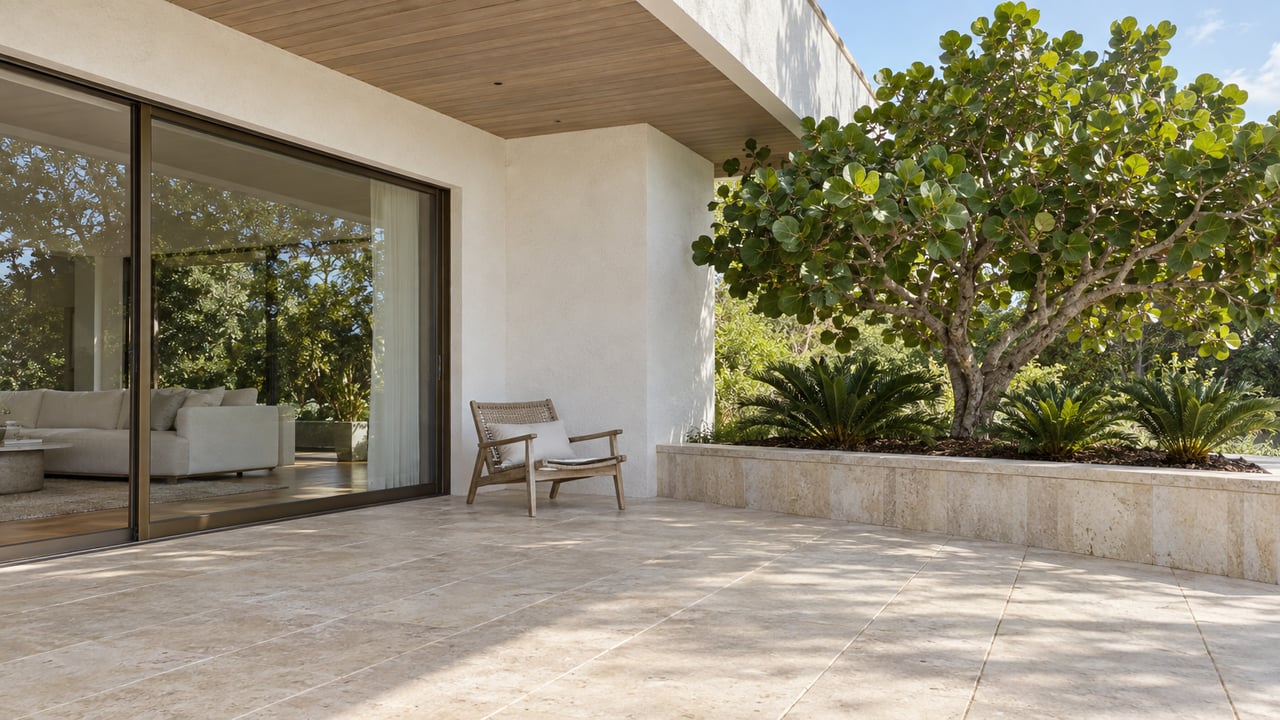
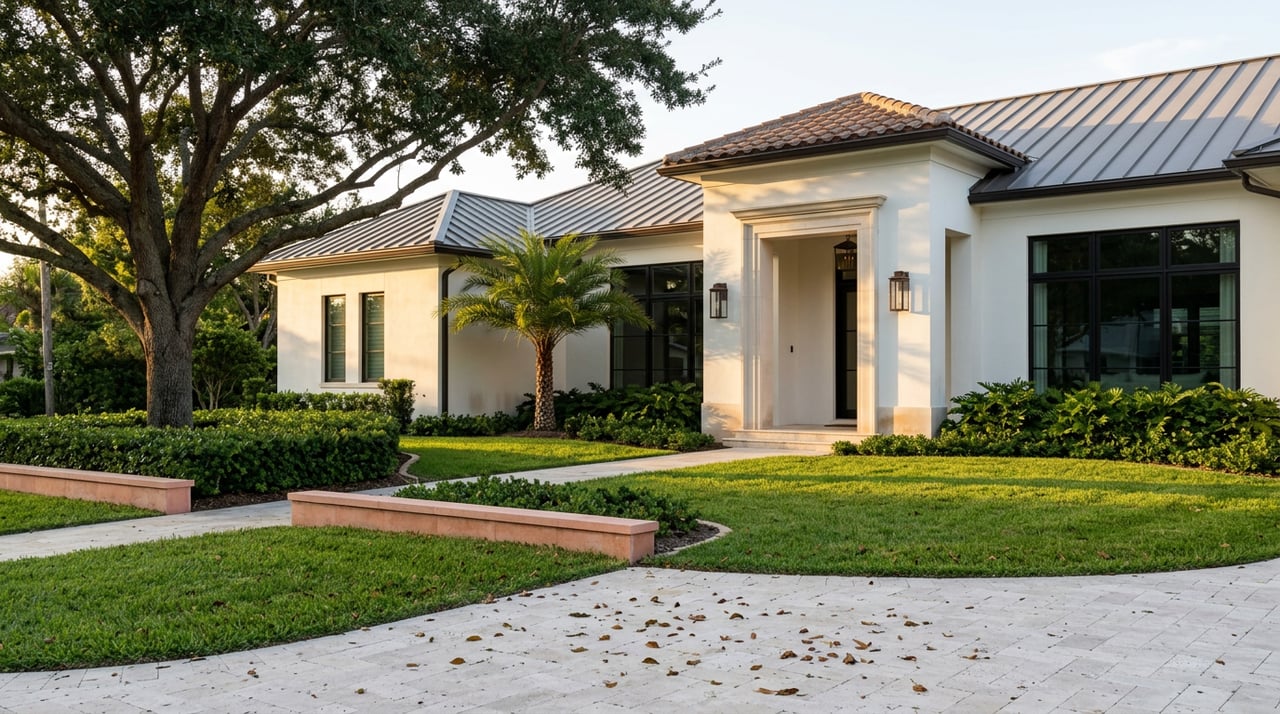
The Town of Jupiter Island is a nine-mile barrier island straddling the Martin County and Palm Beach County line, incorporated in 1953, with roughly 512 houses and 80 vacant residential parcels spread across about 855 residential acres. That's the exclusive stretch of South Beach Road most people mean when they say Jupiter Island: oceanfront estates, Intracoastal frontage, deeded beach access, the kind of privacy that comes from a town government whose stated job includes preserving quiet.
There's also a neighborhood called Jupiter Island sitting inside the city limits of Jupiter itself, a separate and much more modestly priced pocket that has nothing to do with the barrier island town. When a portal pulls neighborhood-level data instead of town-level data, it can end up quoting you a price for the wrong Jupiter Island entirely. That's almost certainly where the $1.7 million figure comes from. It's a real number. It's just not describing the place a buyer picturing oceanfront estates and private docks has in mind.
Strip that one out and you're still left with four sources describing the actual barrier island town and disagreeing by millions of dollars. That part isn't a naming problem. It's a volume problem.
A market that trades by the handful
The Town of Jupiter Island sells, by one deed-based estimate drawing on Martin County Property Appraiser records and BeachesMLS listings through August 2026, perhaps thirty houses in a good year. That's roughly two to three closings a month across an entire town.
When a market that size posts a handful of high-dollar closings in one quarter and a handful of lower ones the next, the median swings hard, because there's no volume to smooth it out. A single $40 million private resale or a single $3.75 million fixer can move a three month median by seven figures without reflecting any actual shift in what the island is worth. That's the mechanical reason four legitimate sources can each be technically accurate about the same town and still land tens of percentage points apart. Some are measuring closed sales, some are measuring what's currently listed, and all of them are working with a sample small enough that a few transactions dominate the average.
What actually moved, and when
If headline medians bounce around on thin volume, the more dependable read is price per square foot over time, because it's less sensitive to whether this quarter happened to include one giant estate or three modest cottages.
By that measure, the picture is much steadier than any single quarter's median suggests:
| Period | Median price per square foot |
|---|---|
| 2016 to 2019 | $551 to $718 |
| 2020 | $956 |
| 2021 | $1,419 |
| 2022 | $1,882 |
| 2023 to 2026 | $1,859 to $2,085 |
The island drifted for four years, then climbed in 2020 on a record 69 qualified sales, double any nearby year, then kept climbing through 2021 and 2022 before settling into a tighter band that has held for three years running. Overall, that's a 3.8 times increase in price per square foot from 2016 to 2026. Volume, meanwhile, has come back down to the island's long-run pace of two to three sales a month, the same thin trickle that makes any single quarter's median so easy to misread.
The island has seen some big individual sales, too. The estate at 613 South Beach Road sold for $16.5 million in 2023. The 0.8 acre lot had sold for $3.5 million back in 2002. The existing 1972 home spanned 4,900 square feet, and the listing brokers noted it could be torn down despite being in good condition. That detail is the whole island in miniature: 95 feet of oceanfront and 90 feet of Intracoastal frontage, with the house secondary to the lot. A few doors down that same stretch, the oceanfront compound at 382 South Beach Road sold for $55 million, one of several eight and nine figure deals that closed during the years the price-per-square-foot table shows climbing fastest.
Deals that never touch a portal
Some of the island's biggest moves happen off any public feed at all. One address illustrates it cleanly: bought on the open market for $26 million in May 2021, it resold privately in February 2026 for $40 million, a 54 percent gain across the very years when luxury markets elsewhere were cooling. A private resale like that never generates a new MLS listing. It shows up, if at all, only in county deed records, well after the fact.
That matters for anyone trying to read the market from a portal. A site's median sale price is built from what closed through the multiple listing service. If a meaningful share of Jupiter Island's real activity happens through private deeds between buyers, brokers, and estates who already know each other, the portal median isn't wrong exactly. It's incomplete, describing a slice of the market rather than the whole of it, and the slice it's missing tends to be the largest transactions on the island.
What to actually check before trusting a number
None of this means the headline figures are useless. It means they need to be read as a starting point rather than a verdict, especially on an island this thin.
Before treating any single median as gospel for a specific Jupiter Island purchase, it's worth asking a few things:
- Is the source describing the Town of Jupiter Island itself, or a same-named neighborhood elsewhere that happens to share the label
- Is the figure a closed sale price or a current asking price, since the two can diverge sharply in a market this small
- What has price per square foot done over the past several years for comparable lot sizes and frontage, rather than what one quarter's median happened to be
- Are there recent private or off-market transfers on file with the county that never generated a public listing at all
A listing's asking price on Jupiter Island is really a claim about a specific piece of land, its frontage, its acreage, and its position relative to the ocean and the Intracoastal. The house on it is often the least durable part of the value. Reading that correctly takes more than a Zestimate. It takes someone tracking the deed records and the closed comps directly, not just the aggregator's quarterly average.
Frequently asked questions
Is the "Jupiter Island" shown on some portals the same barrier island town people mean by the name? Not always. The actual town sits on a barrier island spanning Martin County and northern Palm Beach County. Some portals also track a same-named neighborhood inside the city of Jupiter itself, which is a different, unrelated area with a much lower price range. Confirming which one a figure describes matters before comparing numbers across sites.
Why do some sites show asking prices while others show sold prices for the same period? Portals pull from different feeds and calculate medians differently, some from active listings, some from closed sales. On a market this thin, that distinction alone can account for a large share of the gap between two sites' headline numbers.
If the median isn't reliable, what should I actually look at? Price per square foot over several years gives a steadier read than any single quarter's median, since it's less distorted by one large or small sale. Pairing that with recent closed comps and, where possible, county deed history for a specific stretch of the island gives a much clearer picture than a single aggregator figure.
If you're comparing a Jupiter Island asking price against what the land underneath it is actually worth, that's exactly the kind of question worth working through with someone who tracks the island's deed history directly. The Kelly Team is happy to pull the real comps for a specific stretch of South Beach Road and walk through what the numbers actually mean before you make an offer. Let's Connect.